Sharing a meal together with a family was always considered a special time, when all the members could gather and discuss their day. The concept of shared mealtime became so significant in the research literature that was even attributed a special influential factor in the children’s development. For example, in 2000 Putnam claimed in his book “Bowling alone”, that by spending time together at the dining table, parents may invest into their children’s social capital.
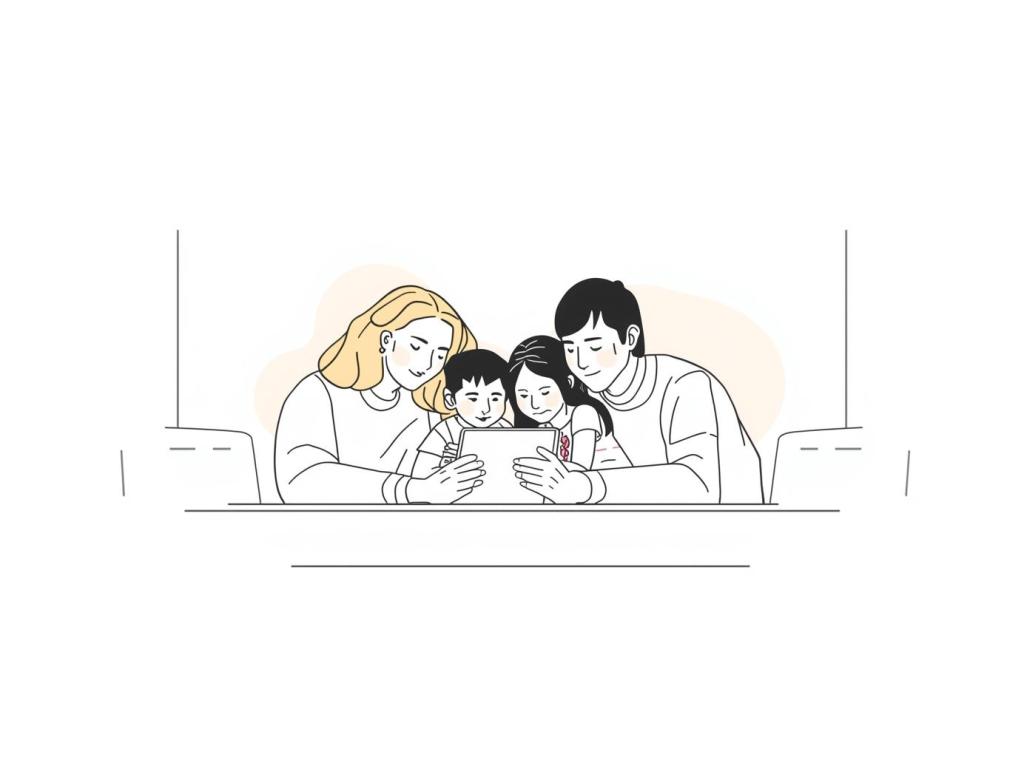
However, Jordan Shapiro (2018), the author of the book “The New Childhood“, posits that bonding with the family during the family dinners is outdated in the time of modern technologies. While OECD has included “family dinners” in their wellbeing measurements in 2017 (as purportedly they help to improve students’ academic achievements), as Shapiro (2018) posited, some people tend to overreport their actual time spent together with the family in an effort to embellish their ideal family image. As the author reminds us, the word family itself came from the Latin “famulus“, meaning servants, thereby pertaining to the household in general rather than to the nuclear modern families we have now, making the concept of “family dinners” already an inappropriate term. Furthermore, as Shapiro (2018) elaborates, family dinners belong in the Victorian era when the time all family members shared the meal counted as a threshold between the work at the factory and home. In this regard, family dinners served as a “sanctionary” in the industrial times.
Shapiro believes that nowadays family dinners are no longer required, and we need to create new customs in the digital world, as parents and children have so many other opportunities to connect apart from eating and talking at the dining table. That is, connecting via gadgets can be one of the feasible solutions.
But if we become too amenable with the amount of screentime children are exposed to, they would spend all their time gaming and watching unnecessary content? First, let’s pause here and try to unearth our deeply rooted feeling of shame when we even think of the screentime concept. Who was the first to cast the first stone? It was Tom Engelhardt in 1991, who used this concept in a critical manner describing the children’s engagement with the videogames and TV. Second, as Shapiro claims, there is nothing wrong with screentime as long as it is well curated and supervised. There is no problem in using a screen as a babysitter – maintains Shapiro, the only problem is when screens are being used only as a babysitter.
So, does it mean the grown-ups should embrace the omnipresence of the screentime and let it construe our reality, shall we give in, eventually, to our perpetual feeling of shame and accept the defeat of our analogue boring reality? To start with, thinking that using technological gadgets during family mealtimes can only deteriorate the quality of communication is an archaic premise. Following the premise by Ferdous et al. (2016), it is important to discern between the usage of the technologies during the mealtime. Employing Heidegger’s (1927) concept, Ferdous et al. (2016) contend that the use of gadgets can be classified into “ready to hand” (when the technological gadget turns into an extension of someone’s hand) and “present at hand” (when the gadgets are perceived as independent objects). Therefore, when the news, music, or movies on TV, phones or tablets played the role of an interactive background, it could be seen as “ready to hand” technologies, whereas Game consoles, laptops, and desktop computers serve as “present at hand” objects, which therefore interfere with family togetherness at a table and require one’s full attention.
As research illustrates, integrating technology in our mealtimes may improve the mealtime quality (e.g., by offering new topics for discussion and prompting richer conversations or simply elevating the mealtime ambiance) (Ferdous et al., 2015; Su & Wang. 2015), on condition that technology is used to draw family together, rather than being a children’s distractor while trying to feed them.
In addition, screentime can be defined differently in different context, be it checking the social networks on the phones or listen to a background TV show. As the study with six participated Australian families by Ferdous et al. (2015) revealed, using technologies during the family meals may “enliven the monotonous experience of everyday meals, i.e., through entertainment technologies” (p. 376). Interestingly, the participants also mentioned that the type of food may also call for distractions, if it is “not a special treat” (p. 376) that the whole family put effort into cooking, chances are the family members will be checking their phones.
Of course, we should not ignore the reality, instead, we should adjust and get the best from the screentime use, albeit without letting too much technology into the mealtimes, as it may interfere with their food consumption, leading to obesity in the drastic cases (see Blass et al., 2006; Braude & Stevenson, 2014; Higgs et al., 2009; Robinson et al., 2017).
In particular, the authors refer to the opportunity to spend time together with the children, thereby, not being an idle observer/judge to their engagement with the screentime, but join in, discuss the games they play and supervise their time at the “digital playground”.
Literature suggests several approaches to make best use of screentime to connect with your child.
- Understanding what the gadget is used for. Technological gadgets may also serve as children’s transitional objects (term first introduced by a British child psychologist Donald Winnicott in 1951), thereby, operating as a comfort object to help with the separation anxiety, necessary for children’s emotional and psychological wellbeing (Shapiro, 2018). Therefore, if the child needs his gadget to be reminded of a family member who is away on a business trip or busy working at the office before the project deadline, it is completely relevant to keep the gadget on the table in an effort to build the “co-presence” of the significant parent/relative
- Co-viewing or watching TV or videos together, with the aim to discuss the content with the child and help them learn something new or enrich/diversify discussions at the dining table (Shapiro, 2018). Remember to carefully curate the content to tailor it to the family values and “family narrative” (Ferdous et al., 2016)
- Supervising and discussing the content/design/production elements of the videogames together with the child (e.g., making sure that the child knows about the “playbour” concept, and about their contribution in generating the content for big corporations) (Shapiro, 2018)
- Aim for connectivity, or virtual “co-presence” (Ferdous et al., 2016) in children’s use of the social media and technological gadgets, thereby taking care of children’s “digital playgrounds” (Shapiro, 2018). Spending time with your kid doing what you both enjoy together may also increase your “connection capital” (a term coined by the educational psychologist Dr Becky Kennedy, 2022)
- If you want to have more structured meals, avoid the temptation to resort to TV at every meal and make them more “present at hand” than “ready to hand” (deliberately position the cellphones/remote controls away from the table or if there is a possibility have dinner in a room with no tv) (Ferdous et al., 2016)
- Agree with the family regarding your meal routines and choose the days in which you all could incorporate the active usage of screentime that would work in the interests of your family (depending on how you want it, you can combine days with technologies “present at hand” and “ready to hand”)
- If your family members decide to watch something on their personal gadgets, discuss the use of the headphones/earphones at the table, as it may also create additional “distance” (Ferdous et al., 2016)
- Keep your own screentime under control too! Remember about the PNP (play, no phone) time, as Dr Becky Kennedy, the author of the bestselling book “Good inside” (2022) advises. Don’t forget to put your phone away and spend a quality time together with your child, so that they clearly see your priorities and intentions for bonding.
- Don’t rely on the gadgets’ own parental “screentime” settings, as some of them were found to be faulty (e.g., Apple devices) (Mauran, 2023).
References
Apple Inc. (2023). Apple confirms Screen Time bug in parental controls. https://www.apple.com
Blass, E. M., Anderson, D. R., Kirkorian, H. L., Pempek, T. A., Price, I., & Koleini, M. F. (2006). On the road to obesity: Television viewing increases intake of high-density foods. Appetite, 47(1), 35–41. https://doi.org/10.1016/j.appet.2006.02.007
Braude, L., & Stevenson, R. J. (2014). Watching television while eating increases energy intake: Examining the mechanisms in female participants. Appetite, 76, 9–16. https://doi.org/10.1016/j.appet.2014.01.004
Children and Screens: Institute of Digital Media and Child Development. (2017). Screen media exposure and obesity in children and adolescents. https://www.childrenandscreens.org/wp-content/uploads/2023/11/2017-Children-and-Screens-Supplement-Screen-Media-Exposure-and-Obesity-in-Children-and-Adolescents.pdf
Ferdous, H. S., Ploderer, B., Davis, H., Vetere, F., & O’Hara, K. (2015). Pairing technology and meals: A contextual enquiry in the family household. In Proceedings of OzCHI 2015: Being Human – Conference on Human Factors in Computing (pp. 370–379). ACM. https://doi.org/10.1145/2838739.2838780
Ferdous, H. S., Ploderer, B., Davis, H., Vetere, F., O’Hara, K., Farr-Wharton, G., & Comber, R. (2016, September). TableTalk: integrating personal devices and content for commensal experiences at the family dinner table. In Proceedings of the 2016 ACM international joint conference on pervasive and ubiquitous computing, pp. 132-143.
Heidegger, M. (1962). Being and time (J. Macquarrie & E. Robinson, Trans.). Harper & Row. (Original work published 1927)
Higgs, S., Woodward, M., & Neal, C. (2009). Television watching during lunch increases afternoon snack intake of young women. Appetite, 52(1), 39–43. https://doi.org/10.1016/j.appet.2008.07.007
Kennedy, R. (2022). Good inside: A guide to becoming the parent you want to be. Harper Wave.
Robinson, T. N., Banda, J. A., Hale, L., Lu, A. S., Fleming-Milici, F., Calvert, S. L., & Wartella, E. (2017). Screen media exposure and obesity in children and adolescents. Pediatrics, 140(2), pp. 97–101. https://doi.org/10.1542/peds.2016-1758K
Shapiro, J. (2018). The new childhood: Raising kids to thrive in a connected world. Little, Brown Spark.
 Digital Parenting Lab
Leave a comment