Recently, I finished reading Opt-Out Parenting by Erin Loechner (2024), a former social media influencer. The book takes a firm stance against the impact of technology and social media on children. While I agree with some of Loechner’s arguments, such as the idea that spending quality time together as a family is far more valuable than everyone being absorbed in their own screens, I couldn’t help but notice that her perspective felt somewhat narrow and somewhat privileged.
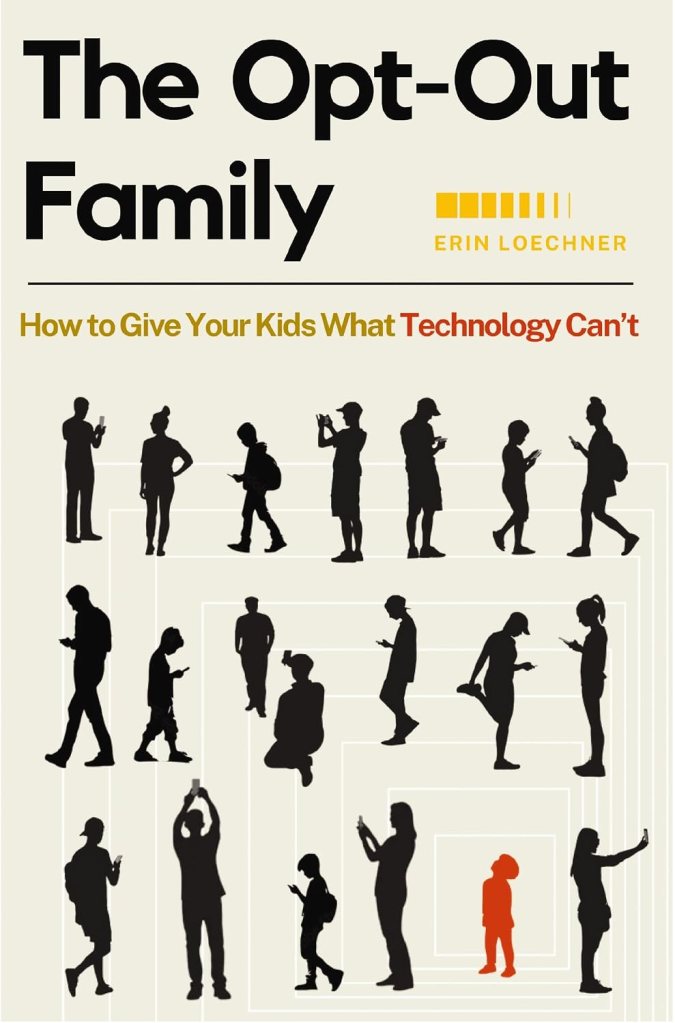
The book is written from the perspective of a well-connected white woman whose success as a former social media influencer is well deserved, but whose privileged position may not reflect every parent’s reality. While her insights may resonate in certain circles, they might not feel relatable or realistic for parents navigating a different social, cultural, or economic context. That’s why I recommend reading the book with a grain of salt, and not taking all its advice literally and not feeling guilty.
Where the Book Falls Short: A Critical Lens
1. The Myth of Easy Community
The author champions the idea of building tight-knit communities, encouraging neighbours to bond over crossword puzzles or help with school science projects. But this assumes a lot: time, energy, trust, and most of all, access. I couldn’t help but wonder:
Does the author have household help? (I don’t know)
Does she have more than one child? (The answer is yes, she has two)
Because when you’re juggling kids, work, and laundry, it’s often far more efficient to Google the answer to your child’s science question or shoot it over WhatsApp to a friend than to go knocking on neighbours’ doors. Sure, it sounds lovely and communal in theory, a vision of holistic, village-style education, but in practice, it’s just not sustainable. No one has time to wait around while your neighbour tries to Google it for you. And let’s be honest, the chances they’re a physicist are pretty slim, especially in London, where your neighbours are more likely to work for a hedge fund than help build a volcano out of papier-mâché.
And for many immigrant families (like mine), building social capital in a new country takes years of consistent effort and trust-building. The expectation to just “lean on your community” doesn’t always align with our lived realities.
2. The AI and Religion Argument
At one point, the author argues that AI is “atheistic”, as if that’s a dangerous flaw. I initially thought it was a joke. But no, the author seriously warns against AI tools not promoting belief in God. This made me uncomfortable in the opposite way: I wouldn’t want AI quoting the Bible to my atheist child either. I’d prefer technology to be fact-based and secular, not moralising or folklore driven. That’s the whole point of it being artificial intelligence, it should inform, not preach.

3. “Freedom from Tech” or Freedom Through It?
While I’m not a huge fan of screen time for kids, I also don’t believe we can-or should-deny it entirely. Why negate it altogether? The author repeatedly declares that “we can be free” by rejecting technology, framing it as the enemy. But why can’t we be free and smart by using technology wisely? Personally, I can’t imagine my daily life without smart devices, from managing work emails to keeping my child engaged with educational videos while I cook. Technology isn’t inherently bad; it’s all about how we choose to use it.
What I Did Appreciate
Despite these critiques, the book isn’t without value. In fact, several of the author’s suggestions really resonated with me, and even aligned with practices I’ve already adopted in my parenting.
1. “IA Time” Instead of “AI”
The concept of Independent Activities (IA) Time is brilliant. Encouraging kids to play independently helps them grow as individuals, boosts creativity, and fosters self-confidence.
2. “Ten Before Ten”
This idea, having ten conversations about sex and consent before your child turns ten, is powerful. It helps children understand their rights, boundaries, and bodies early on, which is essential in today’s world. Learning to define and express those boundaries is especially important as they begin exploring the digital world.
3. Finding Like-Valued Families
The book also emphasizes the importance of building a support system with families who share your values. Organising playdates and family get-togethers can reinforce those values and provide mutual support.
4. De-glamorising the Smartphone
I fully agree with the notion that smartphones should not be treated as shiny prizes. They’re tools- not toys. Presenting a phone as a utility (like a calculator) rather than a gift can help prevent it from becoming a source of obsession, and I am thankful for this idea to the author.
What the EdTech Debate Added to My Reading
I came back to this book after attending an Education Summit 2026 (London) where the benefits and drawbacks of EdTech in schools came up repeatedly, alongside the question of what schools can afford. One panellist remarked that if a boiler broke down, the school would be in trouble. When budgets are that tight, I want to know what a new device or subscription actually adds to children’s learning. The discussion made me understand and appreciate Loechner’s instinct to protect space for childhood, even though I would not go as far in limiting technology in my own home.
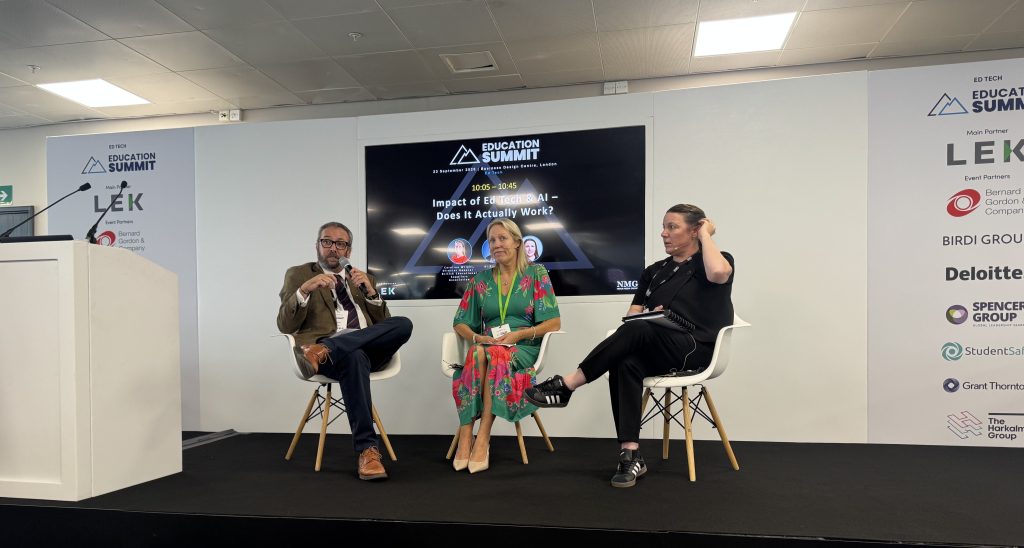
At the Education Summit (2026) panel about EdTech and AI in the UK schools this September
It also made me think of Emily Cherkin, a US advocate whose First Fish Chronicles newsletter I read regularly. In a recent essay, she describes trying to refuse a school-issued Chromebook for her daughter and shares a letter from another parent asking for “meaningful and reasonable analog alternatives” to online assignments. The parent’s line, “Screens are too frequently being put before skills,” stayed with me. The district declined the wider request, though it said paper options were available for one optional AI product and a particular assessment. That gap between what is possible and what becomes routine is worth examining.

Emily Cherkin, the Anti-Chromebook activist from the US, photo taken from https://substack.com/@emilycherkin
I am glad my daughter has not been handed a personal school Chromebook, although they are already used in some UK schools. Cherkin’s example does not persuade me to ban every classroom screen. It does make me ask why an internet-connected device should be the default for a task that could be done just as well with a pencil, a book or a conversation. Families should be able to ask that question without making teachers carry the whole burden of finding alternatives.
Final Thoughts
Opt-Out Parenting has made me think harder about the place of technology in both family life and school. I still believe a thoughtful digital tool can help a child learn, support accessibility or give teachers more time to teach. But as AI and EdTech attract so much excitement, I find it alarming when schools feel pushed to adopt them before asking what children actually gain, and what they might lose.
Where is the child in these decisions? A rise in test scores, or a better position in international comparisons such as PISA, cannot tell us everything about curiosity, confidence, friendship or the ability to think independently. I want schools to ask whether a tool deepens understanding, helps a teacher respond to a child, and earns the money and attention it takes. If it does, use it with care. If it doesn’t, we should feel free to put it down.
What do you think: when has classroom technology genuinely helped your child, and when would a simpler approach have served them better? I’d love to hear your thoughts in the comments!


Leave a comment